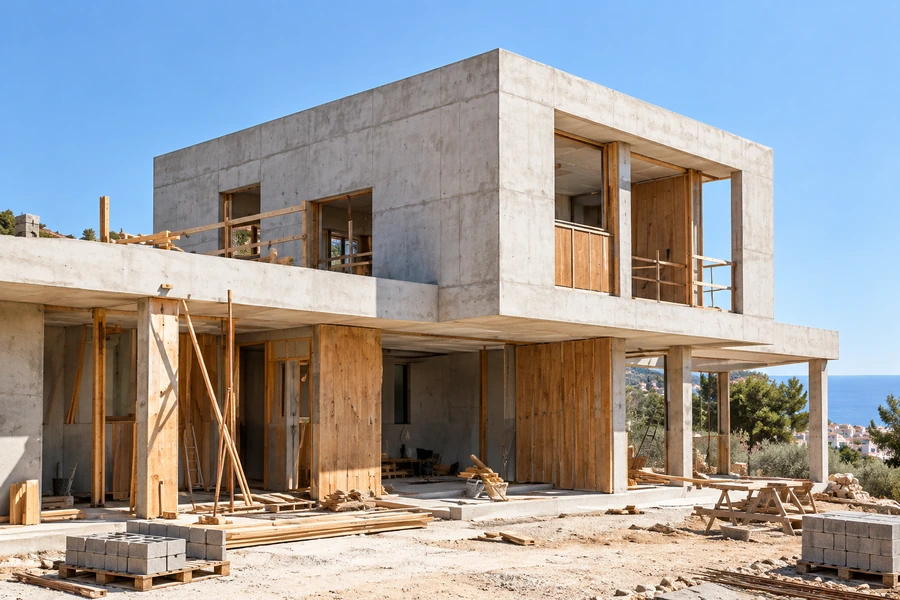
Your Spanish builder has finished, but your removal company needs a date. Before booking it, establish what “finished” means in the documents. The certificado final de obra is a technical completion certificate. It is different from the owner's acceptance of the work, the local occupation procedure and the records used to describe the finished house at the Land Registry.
For an owner living abroad, the practical task is to connect those separate processes. A photograph of a furnished room cannot show whether the necessary installation records have arrived. Nor does an email containing one certificate establish that every condition for the final mortgage drawdown has been met.
Start with the destination of each document
Create a handover index with four columns: document, person producing it, person using it and current status. The same file may support several processes, but each recipient can require its own supporting information. Ask the project team to identify dependencies before giving the move date to suppliers.
For example, technical completion evidence may be needed by the municipality, lender and notary. A document proving that an occupation submission has been made is a different item. An electricity installation record goes to a different process again. Keep the original Spanish document names beside any English explanation so everybody requests the same thing.
If the responsibilities remain unclear, revisit the appointments through our guide to the Spanish building team. The person arranging your furniture may coordinate dates, but cannot replace the technical or administrative roles behind those dates.
Understand what the completion certificate establishes
Under CTE Annex II.3, the director de obra and director de la ejecución de la obra make distinct technical certifications. These concern conformity with the authorised project and the direction and control of material execution. Request the signed certificate and its accompanying records, rather than treating the contractor's final invoice as equivalent evidence.
The annexes address changes and construction controls. If your windows, layout or equipment changed during the build, check that the final documentation reflects the approved solution. An overseas owner should be able to recognise the completed home from its plans without having to reconstruct decisions from months of messages.
Ask the architect to explain any remaining discrepancy before forwarding the document elsewhere. A spelling error in the address and an unrecorded extension are different problems; they should not be bundled together as minor administration.
Record acceptance separately from technical completion
The acta de recepción records the contractor's delivery and the developer's acceptance, potentially with reservations. For a self-build, you may be that developer. Article 6 of the Building Act sets out the reception record and gives its date legal significance. Signing for a set of keys should not become an accidental substitute for understanding this document.
Take a room-by-room defect list to the handover discussion. Use location, description and photograph references, then identify the agreed correction process. Separate incomplete contractual work from defects and from optional improvements you would now like. Combining all three makes the final account harder to resolve.
If somebody will attend for you, agree the limits of their authority in advance. They can gather evidence and coordinate access without necessarily being authorised to accept every contractual consequence. Obtain advice on the proposed signature where necessary, especially if the wording includes a broad release.
Collect an operating file, not just a legal file
The Building Act's Article 7 describes the completed-project documentation and Libro del Edificio. Treat this building book as a working ownership resource. You will need to understand equipment, maintenance and the people who supplied each part after the construction team has left.
| File group | Useful handover question |
|---|---|
| Final drawings | Do these show the installed layout and approved changes? |
| Equipment records | Are model, serial number, controls and service contacts identifiable? |
| Commissioning evidence | What was tested, by whom, and is anything outstanding? |
| Maintenance instructions | Which actions need a professional and when? |
| Reception and corrections | Where are the accepted records and completion of remedial work? |
Arrange a practical demonstration of heating, cooling, ventilation and water controls. If the home will be empty for periods, explain that pattern and ask for operating instructions suited to it. Save a readable digital copy of the index somewhere your local caretaker can access without receiving unnecessary personal information.
Do not merge occupation, utilities and registration
The lawful occupation route depends on the relevant regional and local framework. The technical certificate does not automatically replace it. Our first occupation guide explains the separate questions to put to the municipality or adviser handling that procedure.
Likewise, installed services and permanent contracts are not identical. Confirm the electricity and water position with the relevant operators, including what documentation they still require. A temporary construction supply should not be assumed to settle the permanent residential arrangement.
When organising the declaration and registration of the completed house, the notary will assess a further set of documents. Article 28 of the Land Act expressly distinguishes technical completion evidence from additional requirements. Sharing an early document list can expose inconsistencies before a signing appointment is booked.
A remote handover example
Suppose you can visit Spain for three days. The contractor proposes inspection and key delivery on the first morning, but the ventilation commissioning record is still missing and the permanent water contract is unresolved. The sensible plan is to use the visit for inspection, demonstrations and decisions that require your presence, while documenting the unresolved conditions separately.
Ask which tasks genuinely depend on the commissioning record and who is obtaining it. Request written confirmation of the water operator's remaining steps. Keep flexible accommodation until the occupation and service position is established. This example describes a coordination method, not a standard Spanish completion timetable.
For a developer purchase, compare the proposed delivery with the contract and our off-plan and new-build checks. A self-builder and a buyer may hold similar-looking papers while having different contractual responsibilities.
Leave enough cash and time to finish the process
Keep final professional fees, connection costs, agreed building payments and administrative costs visible in the whole-project budget. Reconcile advances and approved changes before paying the final account. The release of any retention follows the contract; the presence of a certificate alone does not explain every payment condition.
Before fixing the move, produce a short status sheet: physically finished, technically documented, accepted, occupation position confirmed, services arranged and registration process assigned. Each unresolved line should have a named person and a next action. Tell us where your house is and which completion documents are available, together with your intended move date and whether you are building or buying.
Sources and further reading
- Código Técnico de la Edificación, anejo II: documentación y certificado final
- Ley de Ordenación de la Edificación: recepción, documentación y anticipos
- Ley de Suelo y Rehabilitación Urbana, artículo 28
Sources checked on 19 September 2026. Your property documents and local requirements determine how the guidance applies to your project.