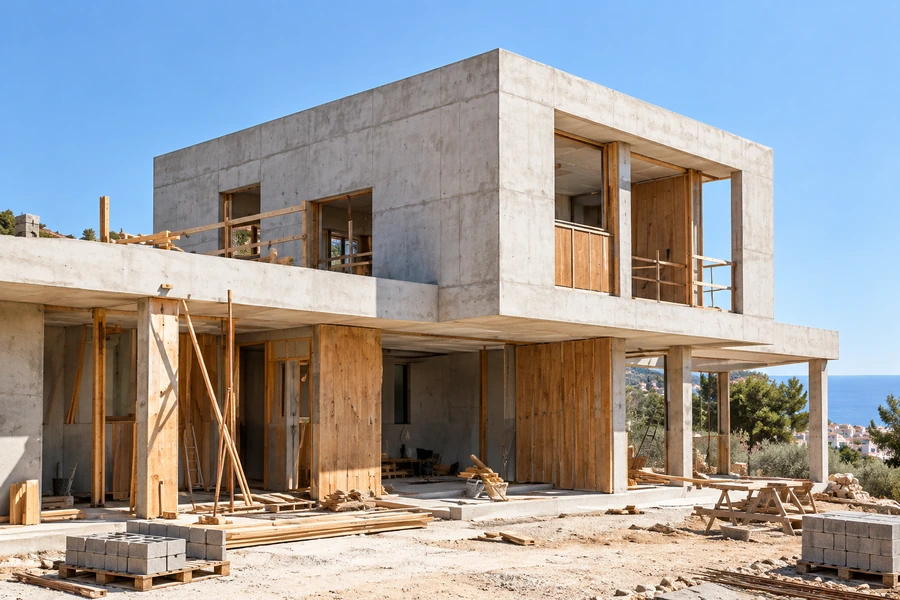
The most important output of a development appraisal is not a beautifully formatted return. It is a defensible decision about whether to acquire a particular site, at what price, and subject to which unresolved matters. For an international investor entering Spain, the quality of local evidence matters as much as the sophistication of the financial model.
Organise the assessment around four questions: can the proposed scheme be delivered, does the product fit its market, can the sponsor fund the delivery period, and what would cause the investment case to fail? Keep those questions connected throughout the review.
Write the investment thesis in plain language
State the intended buyer or tenant, product type, holding period and exit route. A build-to-sell apartment project, a long-term rental investment and a mixed-use scheme need different underwriting. Do not let a spreadsheet silently switch between them when one set of assumptions produces a better result.
Identify the parties involved and their decision rights. If a local partner sources the site, ask who verifies their planning interpretation and who independently challenges the construction allowance. A clear responsibility map is particularly valuable when the investment committee is outside Spain.
Separate title evidence from development evidence
Commission legal review of ownership, encumbrances, rights of access and existing occupation. Ask the technical team to reconcile the site on the ground with the plans used for underwriting. Evidence that a seller owns a property does not establish that the proposed development fits it.
The planning review should identify the applicable local framework, the status of the plot and any steps remaining before construction. Our guide to requesting planning information for a Spanish plot explains how to frame that enquiry without assuming every municipality uses the same document name.
Urbanisation schemes may carry infrastructure and land-transfer obligations under Article 18 of the Spanish Land and Urban Rehabilitation Act. Have the local team identify which obligations attach to this project and how they affect timing and cost.
Underwrite a drawn scheme
Ask for a preliminary layout detailed enough to test circulation, servicing, apartment mix, external space and parking. Reconcile gross construction area with the area generating revenue. A seller's development capacity figure should not be copied directly into the sales model.
For example, a constrained site might support the headline volume but require a circulation arrangement that reduces attractive apartment frontage. The issue is not simply fewer saleable square metres. Unit quality may also change achievable pricing and the order in which homes sell.
At this stage, compare at least two plausible layouts where a material design choice remains open. The aim is to understand the trade-off, not commission several complete designs before the acquisition is justified.
Build an evidence register beside the appraisal
| Assumption | Preferred supporting material | What to record |
|---|---|---|
| Buildable scheme | Local planning review and concept layout | Outstanding interpretation or approval |
| Construction cost | Cost plan aligned to the concept | Scope exclusions and maturity |
| Revenue | Relevant transactions and competing supply | Date, specification and evidence quality |
| Finance | Documented lender terms | Conditions and expiry |
| Programme | Dependencies agreed with advisers | Uncontrolled milestones |
This register prevents estimates from becoming facts through repetition. Label an indicative contractor discussion differently from a priced tender. Do the same for an agent's opinion, an asking price and an evidenced completed transaction.
Model costs and cash at different levels
Include acquisition, professional services, studies, enabling works, construction, utilities, financing, sales and completion expenditure. The apartment-building budget guide provides a useful construction breakdown, while plot preparation and service costs addresses expenditure often missed before site acquisition.
Then place those payments on a monthly timetable. Check equity availability, lender conditions and the sequence of buyer receipts. Ask your advisers to distinguish costs from recoverable cash items and to state the assumptions behind any tax treatment.
A project with a positive development margin can still run short of cash. A delayed drawdown, early equipment payment or slower sales completion may move peak exposure beyond the sponsor's capacity. Show that peak alongside the projected return.
Stress the dependencies that could break the deal
Begin with one-variable tests: construction cost, sales pricing, duration and sales absorption. Follow with combined cases that reflect plausible relationships. A delayed completion may affect financing and receipts simultaneously; treating those changes as unrelated can understate exposure.
Use decision thresholds. What change would require more equity? At what point would the acquisition price need renegotiation? Which uncertain planning assumption would make the intended product unsuitable? Thresholds make the appraisal usable in negotiations and board discussions.
Agree the acquisition route after the review
Give the legal team a concise list of unresolved issues and ask what contractual structure can address them. A deposit, exclusivity period or conditional agreement has consequences that depend on its wording. The guide to reservation and arras agreements is a starting point for the questions, not a substitute for a development acquisition contract.
Match peak cash requirements to the terms of development finance. For a rental strategy, build a separate build-to-rent operating model, including running costs and the period before stabilised occupancy.
The final recommendation should state proceed, renegotiate, investigate further or decline, together with the evidence and next decision date. That is more useful than a confident return based on unverified capacity. Share your Spanish development brief with the municipality, proposed use, acquisition stage and the question your investment team needs to resolve.
Sources and further reading
Sources checked on 19 September 2026. Your property documents and local requirements determine how the guidance applies to your project.