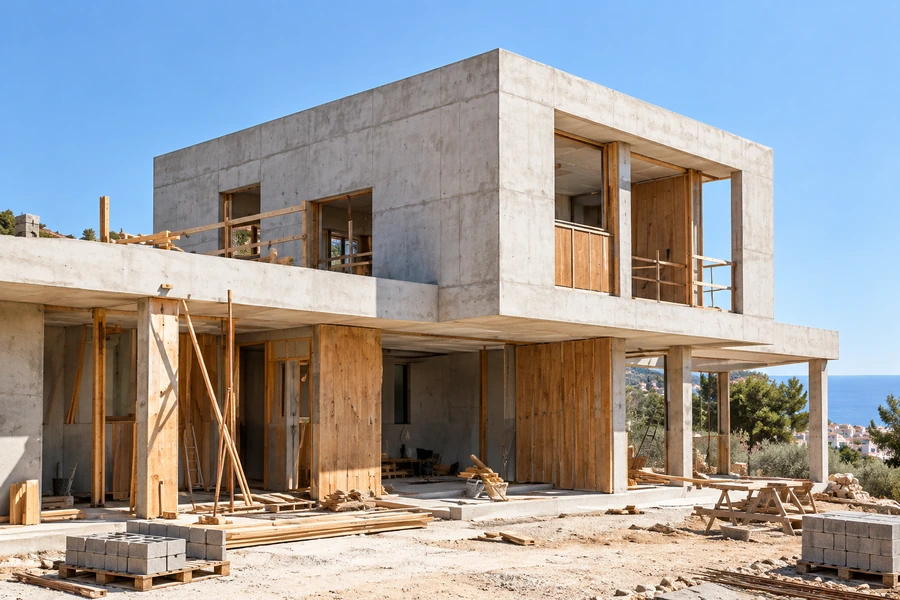
The difficult moment in a Spanish self-build mortgage is often the gap between a contractor asking for payment and a lender releasing money. A hipoteca autopromotor is intended for an owner developing a home, usually with funds made available in stages. You need a payment plan that works between those stages, not merely a loan amount that looks sufficient at completion.
International owners have an additional coordination problem: income may arrive in another currency, documents may need explanation and the construction team works locally. Establish the borrowing process before assuming that a mortgage familiar in your home country will operate in the same way in Spain.
Establish whether the land and project fit the proposal
Give the lender the actual plot information and explain whether you own it, are buying it or have borrowing secured against it. A self-build product should not be assumed to fund the land purchase automatically. Planning status, title and existing charges must be assessed for the proposed transaction.
A first-party example is Bankinter's description of its self-build mortgage, checked on 19 September 2026. It describes registered land, project documents and staged funding. That illustrates the process; it does not establish an entitlement to the bank's advertised terms or a rule followed by every Spanish lender.
Keep the building-plot checks independent. A lender's interest in the transaction does not replace your architect's assessment of whether the intended home fits the site and applicable rules. Resolve those questions before paying an irreversible deposit on a construction package.
Translate your household finances into a euro cash plan
Prepare evidence of income, existing commitments and savings in the form requested by the lender. Explain residence, employment arrangements and the currency in which you earn. These facts affect the assessment; an online maximum borrowing percentage cannot answer them.
List which funds are already in euros and which depend on selling investments, moving money or converting currency. Show the date they can actually be used. An asset statement can demonstrate wealth while still leaving you unable to meet a supplier's payment date.
Then reconcile the mortgage proposal with the complete self-build budget. Professional fees, taxes, outside works and utility connections must remain in the cash plan even where they fall outside the lender's eligible construction scope. Land you already own should not be counted again as readily spendable cash.
Find out what unlocks each drawdown
A drawdown is a release of part of the agreed borrowing. Ask which documents, inspections or valuations support each release, who arranges them and what conditions could hold it up. A contractor's invoice, a professional's progress certificate and the lender's approval are separate events.
This matters for manufactured items. A supplier might request a deposit before windows or a modular element are delivered. The lender may assess value incorporated into the property on a different basis. Confirm how the specific proposed advance will be funded before the order becomes binding.
Use our guide to construction stage payments for the building-contract side, then add a lender column to the schedule. Record invoice due date, supporting evidence, expected release and your cash buffer. Keep bank assumptions distinct from dates somebody has merely hoped for.
Test the peak cash requirement with a worked example
Teaching model only: assume €280,000 of planned payments, including the taxes allowed for in this model, after a plot has already been acquired. The owner has €75,000 of cash and assumes a €205,000 loan. The following releases are fictional, not product terms. The model excludes an additional contingency reserve and groups cash movements at four milestones.
| Milestone | Cumulative payments | Cumulative loan releases | Owner cash required |
|---|---|---|---|
| Start-up and preparation | €40,000 | €0 | €40,000 |
| Structure and orders | €130,000 | €50,000 | €80,000 |
| Main installation stage | €230,000 | €140,000 | €90,000 |
| Completion | €280,000 | €205,000 | €75,000 |
The final contribution is €75,000, but the owner needs €90,000 at the third milestone. That creates a €15,000 temporary shortfall before any extra contingency. A detailed weekly schedule could reveal a higher peak if invoices fall before the assumed release date.
Resolve the gap through verified available funds or an agreed payment and finance arrangement. Do not treat an unapproved loan increase as a solution. Run the same model with one release delayed, and explain who bears the cost if construction has to pause.
Understand the construction period and later repayments
The Spanish term carencia describes a payment-deferral arrangement, whose scope needs careful reading. The Banco de España explains that paying interest alone does not reduce principal, while deferring both principal and interest can grow the debt. It is not a free construction period.
Request a schedule showing the expected drawn balance, interest and instalments during the build and after the deferral ends. Compare offers using the same assumed timing. Ask about charges for inspections, associated products, unused availability where applicable and any agreed extension process.
Include the period when you may pay for temporary accommodation and construction finance at the same time. If your income is in another currency, test a less favourable conversion assumption against the actual euro repayments. That is a household affordability exercise, separate from the property's valuation.
Read the conditions before organising signatures
For lending within the scope of Spain's Law 5/2019, pre-contract information and notarial advice form part of the process. Article 14 provides a minimum ten-calendar-day advance period for the specified documentation, including the FEIN. Confirm the applicable timetable for your case, especially if travel or representation is involved.
The personalised offer needs to explain more than the interest rate. Read the time allowed for drawing funds, final-release conditions, early repayment provisions and treatment of project changes. A cost increase approved with the builder does not automatically change what the bank has agreed to finance.
Make the building contract support the funding plan
Use a sufficiently defined scope when comparing Spanish builders, with advances, stages and changes clearly documented. Otherwise, both the construction budget and the loan application rest on incomplete assumptions. Share the agreed payment schedule with the person coordinating the finance.
Finally, establish which completion documents support the last release. Keep enough liquidity to finish those steps. Tell us your plot status, location, intended home and budget so the construction enquiry can start from your actual stage. Mortgage approval and binding lending terms remain decisions for the lender reviewing your circumstances.
Sources and further reading
- Bankinter: funcionamiento de la hipoteca autopromotor
- Banco de España: período de carencia
- Ley 5/2019: contratos de crédito inmobiliario
Sources checked on 19 September 2026. Your property documents and local requirements determine how the guidance applies to your project.